

How to slow down, pay attention, and actually taste what’s in your cup.
Espresso is one of those drinks that can divide a room. Some can’t stomach it, some knock it back quick and dirty, while others sip and savour — much like a fine whiskey. And honestly? Both camps are valid. But if you’ve ever watched someone close their eyes over a tiny ceramic cup and wondered what on earth they’re experiencing, this guide is for you.
Tasting espresso isn’t about being a snob. It’s about training your senses to notice what’s already there. A well-pulled shot is a surprisingly complex thing – layered, fleeting, and different every time. And honestly, once you know what to look for, you’ll never rush a good one again.
What makes a good espresso?
As a consumer, there isn’t too much you can do here to improve what you are drinking, but it’s useful to understand what makes a good espresso and what to look for when you order one to help you know if it’s going to be good or not.
A good espresso is all about the extraction. Usually a lot of coffee roasters will tell you fresher is better, which is not untrue, but for us when it comes to espresso the top priority is in the extraction. If your extraction isn’t right then what lands in the cup is going to be sub-standard.
What is a good extraction?
It’s the barista’s job to worry about the numbers and the science behind it, but essentially it’s about volume, grind size and temperature. If any of these are misaligned to the recipe that’s where your shot is going to taste off.
A good espresso should have a very fine mouse tail of coffee trickling into the cup for around 30 seconds, any less and it’s likely to be sour in taste, any more and it’ll be bitter. Similarly if the coffee is gushing out into the cup take a hard pass, or if its dripping slowly then again expect a heavy sour taste on the tongue.
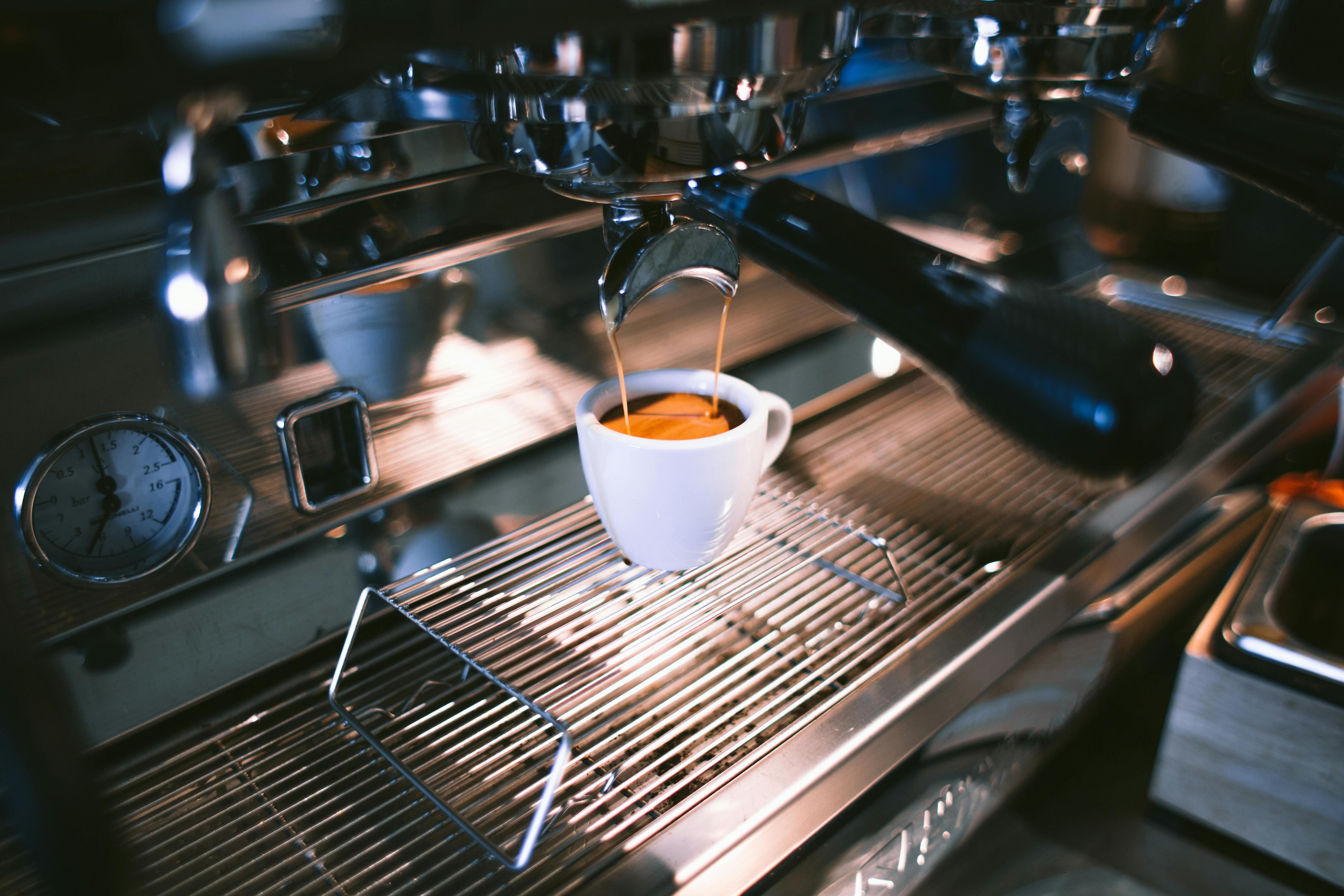
How to taste a good espresso – what to search for in the cup
Let’s break down an espresso into four key characteristics. Think of these as a framework for paying attention. You don’t need to nail the vocabulary; you just need to slow down long enough to notice.
Aroma
Now before you even take a sip, bring the cup close and breathe it in. Let the scent fill you nasal with and savour that moment, this is where so much of the flavour story begins. A good espresso should be nutty, chocolatey, often floral, or fruity – sometimes all of those at once.
Aroma is such a huge part of the coffee tasting experience, as it primes your brain of what to expect the moment it hits your tongue. As an analogy, think of a bacon sandwich as a similar example, or freshly baked bread, the smell triggers the brain to know how that’s going to taste before you’ve even eaten taken a bite.
Try this: Before you tuck into your espresso, bring it to your nose and take in a good old sniff and let it all linger for a moment. What can you smell, is it fruity, or nutty? Feel free to take notes of your findings.
Body
The body is where we refer to the weight and texture of the espresso in your mouth – not the flavour, but the feel. A full-bodied espresso feels thick, almost velvety, coating the tongue like cream. Where as a lighter body feels more watery or tea-like. Neither is wrong, but the body tells you a lot about how the coffee was roasted and extracted.
Try this: As an experiment for your learning, take a sip of your espresso and let it rest on your tongue for a moment before swallowing. Asses how it feels, does it feel heavy or light? Silky or thin? Creamy or dry? Feel free to take notes of your findings.
Flavour
Now this is the biggie. Espresso flavour is remarkably wide-ranging. Sure it’s going to taste of very strong coffee at first, but the more you practise the more you’ll get used to tasting through that intense coffee flavour and start to pick out different notes. It takes some time so persistence is definitely key here.
The sort of flavours you’re going to be tasting is chocolate, often distinguishable as milk or dark chocolate, caramel, citrus notes such as orange and lime too. If you’ve ever had a really intense dark chocolate before and noticed an orange-like flavour to it, this is a similar effect to espresso tasting.
If it’s a super dark Italian-style roast you might even get some tobacco-like notes, and similarly for lighter roast you might get berries, or stone fruit notes like cherries, blackberries and pomegranate. Don’t feel self-conscious naming what you taste either, your brain will pick out those memorable flavours and associate them to flavours you’ve experienced before, trust that instinct — your palate is right.
Try this: Take a small sip and move the coffee around your mouth. Different parts of your tongue pick up different things — sweetness at the tip, bitterness further back, acidity on the sides.
Finish
The finish, sometimes called the aftertaste, is what lingers after you swallow. A long, pleasant finish is the hallmark of a well-crafted espresso. It might fade slowly into something sweet or earthy, or it might end cleanly and quickly. A harsh or unpleasant finish often signals over-extraction or a lower-quality bean. Pay attention to how long it lasts and whether you want another sip.
Try this: After swallowing, breathe out gently through your nose. The retro-nasal sensation often reveals flavours that weren’t obvious on the palate.
Putting it all together
You don’t need to analyse every shot like a competition judge. The point is simply to be present with your coffee for a few minutes – to sip slowly, notice what comes up, and let yourself be curious.
It’ll take an element of rinse and repeat to really get into the flow of teaching your brain to pick those notes out. Familiarity makes it easier to spot the nuances, so the easiest way to achieve this is to have the same espresso from the same place a few times, the consistency will really help you learn, and if it’s from a credible cafe, you should be picking out some delicious flavours too. Over time, you’ll start to notice when something tastes different – more bitter than usual, thinner than expected – and that awareness is where real appreciation begins.
Good luck!